
Amazon KYC Documents by Country: A Guide for European Sellers
Amazon's KYC document requirements shift depending on your company's jurisdiction, entity type, and marketplace. Here's what European sellers typically need to prepare, why documents get rejected, and what changes by country.
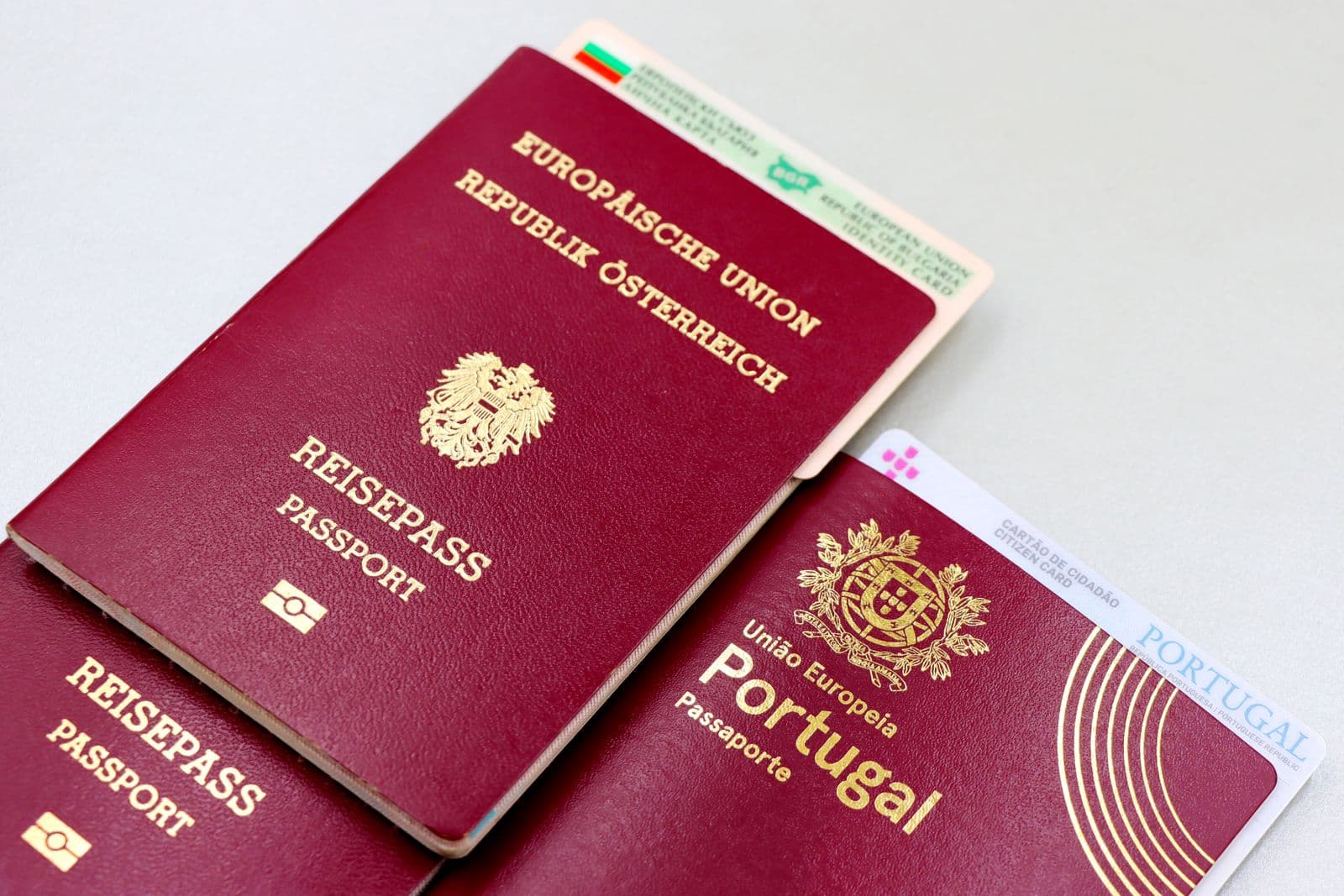
Amazon KYC documents aren't a single universal checklist. Expect a government-issued ID for each beneficial owner and director, proof of address dated within 90-180 days, incorporation records, a registry extract, and banking information — but the exact combination depends on where your company is registered. A German GmbH and an Estonian OÜ selling the same product can get two different document requests. That's not Amazon being inconsistent. That's Amazon checking different legal structures against different national registries.
What Amazon is actually checking
Requirements shift with your company's jurisdiction, entity type, and marketplace — a checklist built for a UK Ltd doesn't map onto a Bulgarian EOOD, because the underlying registries and disclosure rules differ. What stays constant is what the reviewer verifies: a three-way match between the legal entity (does its status match the registry right now), the beneficial owners (are the people who actually control it identified — not just the account contact), and the financial instruments (does the payout bank account belong to the verified entity). None of this is Amazon being suspicious of you specifically — a legitimate storefront and a fraudulent one look identical until ownership is confirmed. See it as a three-way match, not a document drop-off, and the rest gets easier.
The core Amazon KYC document checklist
Exact requirements vary by country and entity type, but most reviews draw from the same document areas. Prepare against this list before Amazon sends you anything specific:
- Identity documents for directors, representatives, and beneficial owners — a valid, in-date passport or national ID with a photo
- Proof of address — a utility bill, bank statement, or government correspondence, usually dated within the last 90-180 days
- Company incorporation documents and a registry extract showing current, active status
- Beneficial-owner information — anyone who owns or controls a meaningful share of the business
- Banking information matching the account linked to your seller account
- Business address information
One thing that trips up more sellers than it should: Amazon wants the bank account that matches the seller entity, not a personal account you're routing payouts through. If your bank doesn't issue traditional statements, a reference letter on its letterhead is usually the closer substitute — check what Amazon actually requested first.
What changes by country is which document satisfies each category. We cover businesses registered across Estonia, Bulgaria, Germany, Austria, Belgium, Croatia, Czechia, Denmark, Spain, France, Greece, Hungary, Ireland, Italy, Latvia, Lithuania, Malta, the Netherlands, Poland, Portugal, Romania, Slovakia, Sweden, and the United Kingdom, plus the US, Canada, India, China, the UAE, and other MENA markets.
Need help with your Amazon verification?
We can review your documents, identify inconsistencies, and guide you through preparing the next submission.
Who actually counts as a beneficial owner
Generally, anyone who owns 25% or more of the company, or otherwise exercises significant control, counts as a beneficial owner — including ownership held indirectly through a holding company. This is where European sellers trip themselves up: not hiding anything, just working from a simpler picture than their actual structure — a holding company above the trading entity, a co-founder with 20% on paper but real control through a shareholders' agreement. Amazon checks the real structure against the registry, not the elevator-pitch version. If yours involves a holding company, nominee shareholders, or a recent change the registry hasn't caught up with, map it out before you submit — better to explain it than to react to a rejection.
Why Amazon rejects KYC documents
Amazon's rejection messages are famously unhelpful — usually a line saying a document "could not be verified," with no detail on what's actually wrong. In practice, most rejections trace back to a handful of repeat offenders:
- A name that's slightly different across your ID, bank statement, and registry entry — a missing middle name, a transliteration, a maiden name on one document only
- A proof-of-address or banking document that's valid but outside the 90-180 day window
- An undisclosed beneficial owner — a stake below threshold on paper, or behind a holding company
- A scan issue — glare, a cropped corner, a compressed file — that makes a field unreadable
- The wrong document type — a reference letter isn't a substitute for a bank statement
Resubmitting the same set and hoping for a different result isn't a strategy. Reject it once for a reason you can't identify, and Amazon will likely reject it again — each cycle adds another review period.
How Complymerce helps
We provide country-specific guidance, review documents for completeness against your company registry, map out beneficial owner structures before they become a problem, and handle resubmission where documents were already rejected.
Frequently Asked Questions
What documents does Amazon require for KYC verification?
At minimum: a government-issued ID for each beneficial owner and director, proof of address within 90-180 days, incorporation or registry documents, and banking information. Amazon may ask for more — an authorization letter, an ownership diagram, a video verification — depending on your jurisdiction and structure.
Why do Amazon KYC documents keep getting rejected?
The most common causes: a name that doesn't match exactly across your ID, address proof, and bank statement; a proof-of-address document outside the 90-180 day window; an undisclosed beneficial owner; or a scan that's cropped or missing a required field. Amazon's rejection message rarely says which one — that's what has to be worked out before resubmitting.
How long does Amazon KYC verification take?
Amazon typically reviews correctly submitted documents within a few business days, longer during peak periods or manual review. The bigger driver of total time isn't Amazon's queue — it's how many rejection-resubmission cycles you go through. A seller who gets it right first time often beats one who submitted earlier but hit two rejections.
Written by Complymerce
Amazon registration, KYC, marketplace compliance, Account Health, and ASIN investigation support for international sellers.
Related Articles